

How Can We Protect One Another Online?
 Pavel Antonov 09-11-2026.
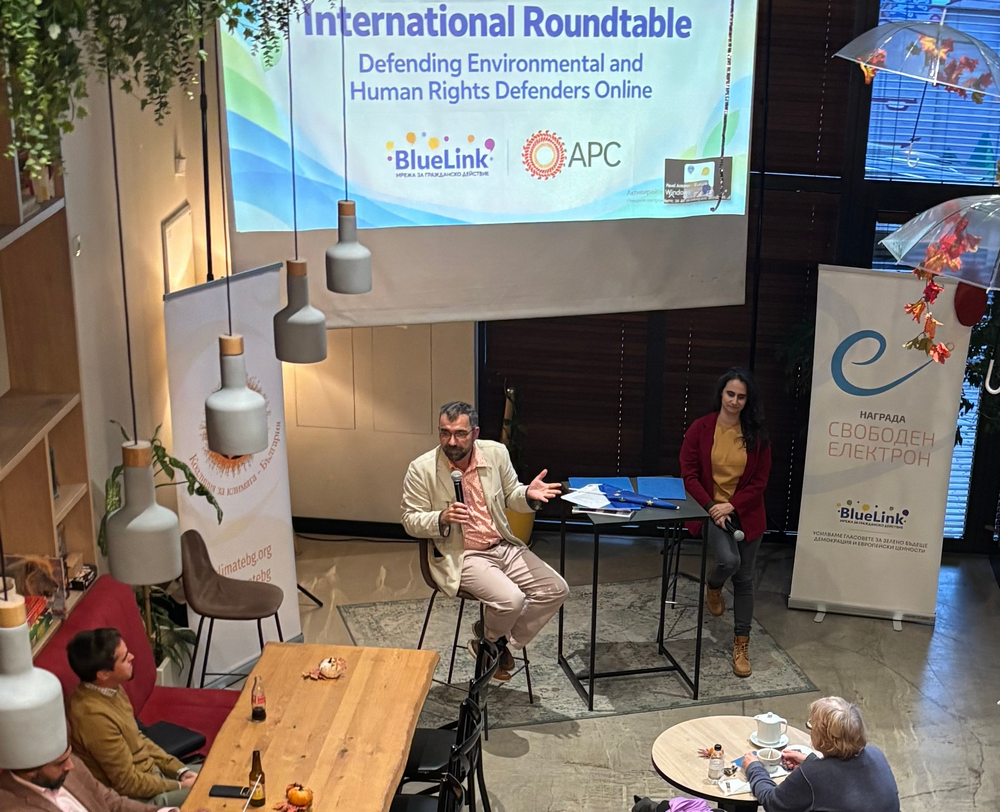
From online harassment, smear campaigns and digital threats to legal pressure and personal intimidation — attacks against defenders of nature, the climate and human rights move between digital and physical environments, restricting civic participation.
Since Daniela Toneva began actively opposing pollution associated with the Bobov Dol thermal power plant, she has been forced to defend herself — both offline and online — against social media attacks, public smear campaigns and personal intimidation. Online hostility eventually escalated into an attack on her home and car in the village of Shatrovo in 2025. Her account, shared with participants in the international roundtable on digital protection for defenders of nature, the climate and human rights, organised by BlueLink in Sofia on 22 October 2026, revealed how pressure in the digital environment intersects with threats in real life.
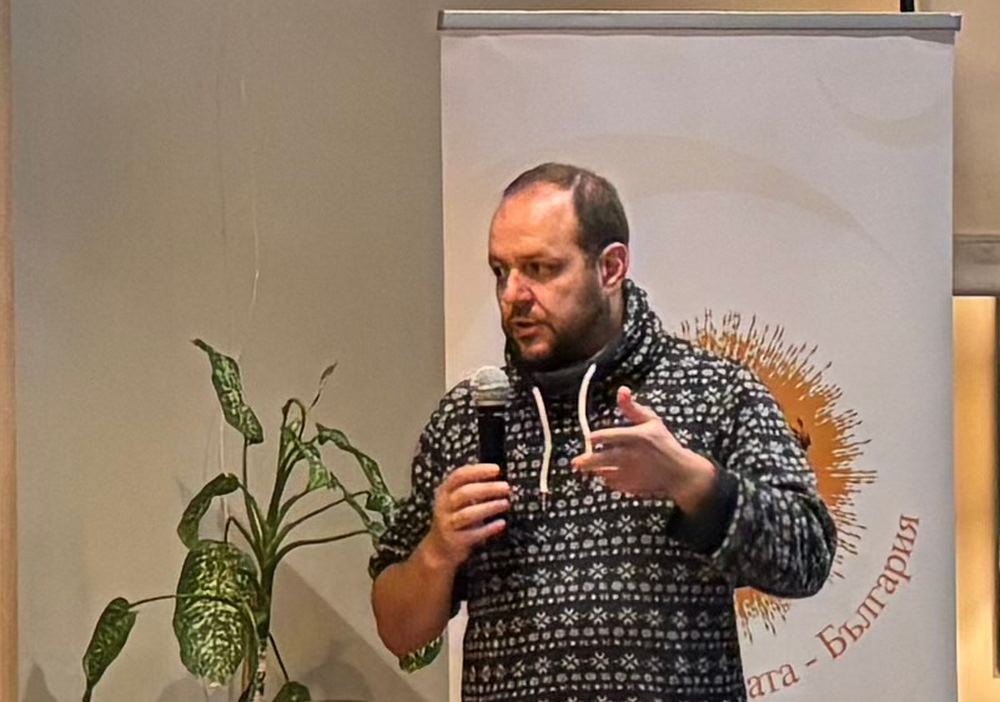
Toneva's experience is far from isolated. Former Bulgarian Minister of Environment and Water and Deputy Prime Minister for Climate Policy Borislav Sandov (pictured below) described the legal pressure he had experienced as an environmental defender. He recalled a lawsuit brought against him over a 2014 Facebook post in which he had referred to businessman Lachezar Tsotsorkov, associated with the Asarel-Medet mining company, as a "poisoning oligarch". Paradoxically, Sandov was convicted of insult but acquitted of defamation — a significant distinction concerning the boundaries of freedom of expression online when public statements address the health and environmental consequences of industrial activities.
Other participants in the discussion shared experiences of threats, legal proceedings, public smear campaigns, institutional obstacles and online aggression. Although different in nature and origin, these forms of pressure often accumulate and reinforce one another. Civic defenders are forced to devote increasing amounts of time, money and energy to protecting themselves rather than advancing the causes they work for.
As part of its systematic efforts to protect environmental defenders, BlueLink is analysing the forms of pressure they face online and identifying effective methods of protection. This work is being carried out through a project called DiEHaRD — Digital Advocacy for Environmental Human Rights Defenders. With support from the Association for Progressive Communications (APC), investigative journalist Nacho Strigulev is examining the experiences of defenders of nature, the climate and human rights, the consequences of the pressure they face, and ways in which they can protect themselves collectively.
Pressure rarely comes from just one direction
Preliminary findings from research interviews conducted in Bulgaria reveal a complex picture. Online attacks intersect with conflicts within local communities, media smear campaigns, administrative obstacles and legal proceedings. It is difficult to consider each form of pressure in isolation from the others.
Attacks do not necessarily have a common perpetrator or follow a coordinated plan. Hostile publications, conflicts at public meetings, financial difficulties and legal proceedings may arise from different causes and interests. For the person affected, however, the outcome is similar: increasing efforts are diverted towards protecting their reputation, security and right to participate in public debate.
Even without evidence of a coordinated campaign, the cumulative effect can discourage civic participation.
Significantly, digital pressure does not always involve hacking or technical security breaches. Public vilification, hostile insinuations and personal attacks on social media can also cause serious harm. At the same time, the very digital tools used to carry out these attacks enable defenders to raise public awareness, document violations, share evidence and support one another.
The courtroom as an extension of public conflict
The right to judicial protection is a fundamental democratic safeguard. Legal proceedings, however, can also be used to exert pressure on people participating in public debate. Even when they successfully defend their positions, they often pay a considerable price in money, time and effort.
Such abuses are known as Strategic Lawsuits Against Public Participation (SLAPPs). Directive (EU) 2024/1069 introduces safeguards against manifestly unfounded claims and abusive court proceedings in civil and commercial matters with cross-border implications. European lawmakers recognise this form of pressure as a threat to journalists, human rights defenders and others engaged in public life.
Not every lawsuit aimed at protecting someone's reputation constitutes a SLAPP. Sandov's case nevertheless raises the question of how effectively courts can protect people who raise matters of significant public interest, regardless of the outcome of the proceedings.
Legal, media and political attacks acquire a new scale in the digital environment. Accusations and insinuations circulate repeatedly, reach new audiences and can sustain doubts about the affected person's reputation over prolonged periods. The individual must respond simultaneously to a specific legal claim or accusation and to a public campaign challenging their legitimacy.
Women defenders face additional risks
Online aggression also has a specific gender dimension. Women defenders frequently become targets of attacks unrelated to their positions or actions.
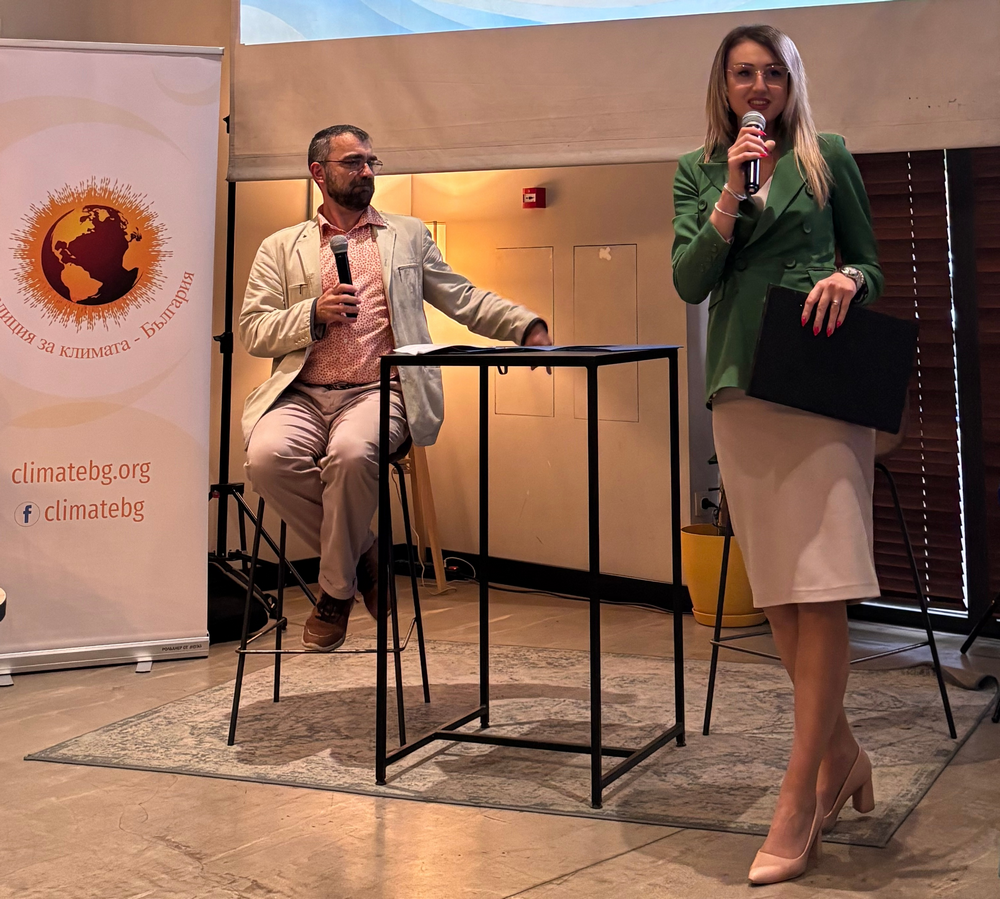
Krasimira Yovkova of the association "Youth for a Green Future" (pictured below), who is also involved in local government, described the additional pressure facing young women engaged in environmental and civic causes. According to her, criticism directed at women in public positions often becomes personal and gender-based. Rather than challenging their arguments, attackers question their very right to participate fully in public debate.
 This issue connects with a parallel initiative to strengthen the capacity of civil society organisations to resist pressure, which BlueLink is implementing with support from the RavniBG coalition. The initiative investigates digital threats against human rights organisations and activists, including the specific risks faced by women defenders.
These observations are consistent with findings from APC's international work. At the Sofia event, Chat Garcia Ramilo, Executive Director of the global digital rights network, cited research into digital threats faced by civic activists in four countries of the Global South. The study "Online Challenges, Offline Realities" identifies social media harassment and online attacks as recurring problems for human rights defenders. It confirms the connection between digital violence against women human rights defenders and harassment, threats, smear campaigns and pressure outside the internet.
Chilling effect: restricting civic participation
Victims of such online attacks pay a high price. This includes anxiety, lost time, financial costs, fear for their loved ones and damage to their reputation. Society and democracy also suffer when people's ability to participate in decisions affecting their lives and environment is restricted.
Under EU law, the right to participate in environmental decision-making is not limited to submitting a written opinion or attending a public consultation. People must be able to express their views, challenge decisions, seek information and pursue justice without facing disproportionate risks of retaliation. This principle is enshrined in the Aarhus Convention of the United Nations Economic Commission for Europe, ratified by the EU and its Member States. The Convention guarantees access to information, public participation in decision-making and access to justice in environmental matters. Article 3(8) requires that people exercising these rights must not be penalised, persecuted or harassed for doing so.
The formal right to participate, however, loses its meaning when exercising it leads to intimidation, public vilification or unbearable personal costs. Preliminary DiEHaRD findings reveal different responses to such pressure. Some defenders become increasingly selective about when and how they speak publicly, including what they share on social media.
Others respond by becoming even more active. Yet continuing advocacy work does not mean that the pressure has had no consequences. A person may maintain their public position while paying the price through exhaustion, personal conflicts and the constant diversion of resources away from their core activities.
A democratic deficit gradually develops. Instead of discussing whether a particular project causes pollution, whether an administrative decision is lawful or whether public funds are being used properly, public debate shifts towards the personalities and behaviour of those raising these questions. When digital platforms amplify this shift, they become instruments restricting civic participation rather than enabling it.
Can European rules help?
European legislation already provides tools to counter certain forms of online abuse and hold digital platforms accountable. The Digital Services Act (DSA) requires platforms to provide mechanisms for reporting illegal content and opportunities to challenge certain content moderation decisions. Very large online platforms are also subject to additional obligations to assess and mitigate systemic risks.
Petar Galev, an expert on the Digital Services Act at the European Commission Representation in Bulgaria, commented in his personal capacity on the responsibilities of digital platforms and the potential of European regulation to help protect civic activists against online harassment and smear campaigns. The DSA does not eliminate online aggression. Not every offensive, unfair or manipulative publication constitutes illegal content, and the regulation does not provide grounds for removing every instance of unwanted criticism. It does, however, establish procedures for reporting and reviewing illegal content. It also provides for trusted flaggers, whose reports must be processed as a priority.
Civil society organisations can use these opportunities to document online attacks, submit reports, challenge platform decisions and engage in joint advocacy. Doing so, however, requires knowledge, expert assistance and effective institutional oversight of the implementation of the rules.
When digital infrastructure creates environmental conflicts
The infrastructure underpinning digital technologies can itself generate environmental conflicts. Poncelet Ileleji (centre in the photograph below), an APC Board member from The Gambia and founder of Jokkolabs Banjul, raised the issue of water resources needed to cool large data centres and the consequences of constructing such infrastructure for local communities.
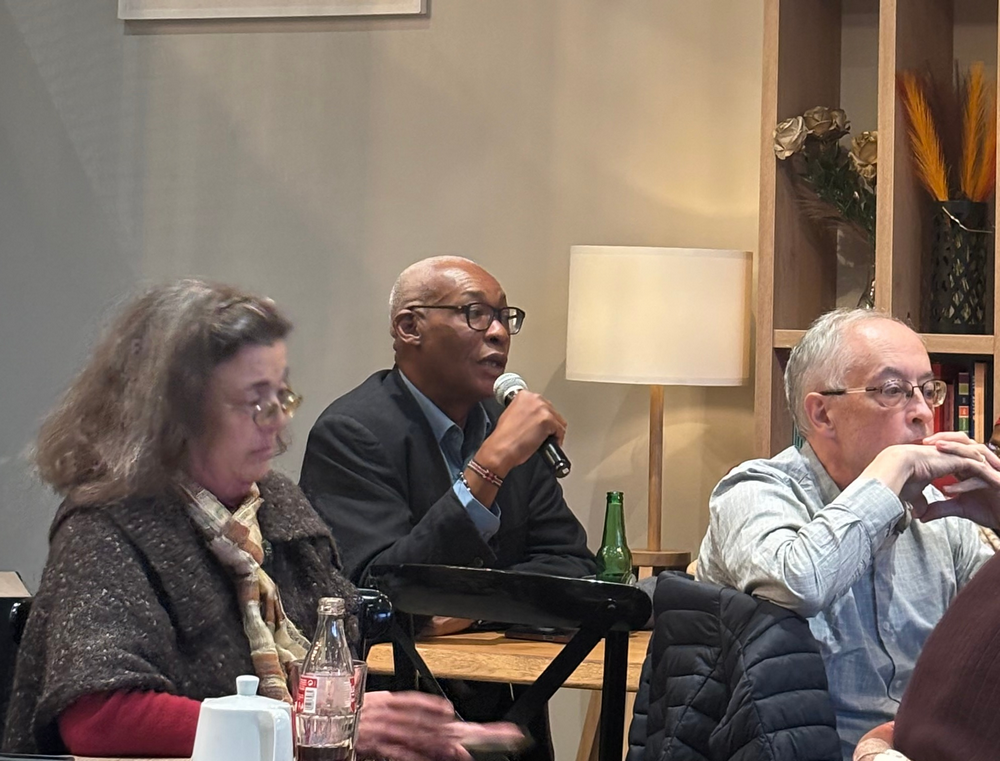 APC Board Chair Leandro Navarro (first from right on the photo above) described opposition to the construction of mega data centre complexes in Catalonia and the European campaign "Stop Dirty Data Centres". Navarro drew particular attention to public funds used to attract such investments. He compared the development model of these facilities to a "planted mine": "Large data centres can serve customers around the world, while water and energy consumption, infrastructure requirements and environmental consequences remain concentrated in local communities," Navarro warned.
Data centres do not extract minerals, but they can require substantial local resources. Navarro's comparison raises the question of who benefits from the digital economy and who bears the costs of its development. "The impact of different data centres depends on the technologies used, energy sources, cooling systems and local conditions. Decisions about their construction, however, invariably raise questions about transparency, community participation and the distribution of environmental and economic consequences."
Digital technologies give civil society organisations new opportunities for communication, mobilisation and rights protection. At the same time, they are used to exert pressure on defenders, while the infrastructure supporting them creates new environmental conflicts. All this presents civic defenders with a dual challenge: defending their rights in the digital environment and demanding democratic oversight of the development of digital infrastructure.
Protection cannot be solely individual
BlueLink's preliminary findings indicate that the support defenders receive from other individuals and organisations is crucial to resisting pressure against civic activists. Accessible legal assistance, reliable expert evidence, public visibility and international solidarity enable them to continue their work when under attack.
These resources, however, are not always available when needed. Support often depends on limited funding, small numbers of volunteers and personal contacts. Meanwhile, threats, legal proceedings and public attacks require rapid and coordinated responses.
Individual defenders must not be left alone to face threats, legal proceedings, public vilification and administrative pressure. What is needed is protection combining legal, organisational, communication and digital measures. Preparation before conflicts arise, sharing experiences, preserving evidence and providing timely mutual assistance are just as important as responding after an attack. This is the collective approach that BlueLink and APC are developing through DiEHaRD.
- DiEHaRD: Defending the defenders of nature and human rights in the digital environment — about the project's objectives, activities and international support.
- Environmental and climate activists train for legal and media defence — about the BeLIFE training held in October 2025.
- Environmental and climate defenders possess valuable democratic knowledge — about defenders' experience and knowledge and their importance for democratic governance. (In Bulgarian.)
- A new portal offers 17 ways to file a complaint regarding environmental rights — about the European tool for protecting environmental rights presented at the same forum.
- Monitoring, transparency and measurable oversight of a data centre project — about public participation and environmental concerns relating to digital infrastructure. (In Bulgarian.)
- More about support for environmental and human rights defenders under BeLIFE, digital advocacy under DiEHaRD, and BlueLink's international cooperation with APC.
About BlueLink.net
BlueLink.net is a network for civic thinking and action that supports the strategic use of digital communications by citizens and their organisations to protect the environment, strengthen democracy and defend European values. The BlueLink Foundation is a full member of the international Association for Progressive Communications (APC).
 This publication has been prepared within the framework of the BeLIFE project, which is co-funded by the European Union's LIFE Programme. All publications produced under the project are available here.
The views and opinions expressed are those of the authors alone and do not necessarily reflect those of the European Union or the European Climate, Infrastructure and Environment Executive Agency (CINEA). Neither the European Union nor CINEA can be held responsible for them.

 This publication is also co-funded by the DiEHaRD – Digital Advocacy for Environmental Human Rights Defenders project, implemented by the BlueLink Foundation with support from the Association for Progressive Communications (APC). The project strengthens the community of environmental and climate defenders in Bulgaria and develops practical tools for collective digital advocacy, access to information and the protection of environmental rights.
Support BlueLink
BlueLink.net is a network for civic thinking and action that supports the strategic use of digital communications by citizens and their organisations to protect the environment, strengthen democracy and defend European values. The BlueLink Foundation is a full member of the international Association for Progressive Communications (APC) and supports and coordinates the work of Climate Coalition Bulgaria.
The BlueLink Foundation maintains the network and works in the public interest to promote:
• free access to information and knowledge;
• free and independent media and quality journalism;
• the protection of nature, the climate and human rights;
• an active civil society and democratic governance.
If you share our mission and would like to support our independent work, you can make a donation to BlueLink. For more information or other ways to support us, contact us.

- Влезте или се регистрирайте, за да пращате коментари.


Последно от » Новини
- Environmental defenders’ knowledge is essential to democracy
- Journalists and experts: It’s time for national policies on climate adaptation
- Bulgaria at the Global Greenaccord Forum on Integral Ecology and Journalism in Treviso, Italy
- EU's Fundamental Rights: Citizens' Secret Weapon in Court
- Climate Coalition Bulgaria at CAN Strategy Meeting
- FRA Director: Fundamental Rights Are Key to Tackling Democracy and Climate Crises
- Environmental and Climate defenders in open dialogue with DG Clima in Sofia
- Environmental and climate activists train for legal and media defence
- BNT Launches Weekly Climate Segment Following BlueLink Training
- Bulgaria now has a national goal of climate neutrality by 2050
В действие

Наскоро публикуваха
 |
 |
 |
 |
 |
 |
 |
 |
 |
 |


